You Should Get Outside More (says science)

Summary of research and a few exercises you can useCanyon in NM

I don’t use the word should very often.  It’s a dirty word. And who am I to tell anyone they should do anything? But I will right now: you should get outside more!  And it’s not just me saying this, it’s science!

I’ve long been a lover of the outdoors participating in numerous sports and other outdoor activities over the course of my life. However it was about 10 years ago when I was on a 4 day backpacking trip with a self admitted stress-loving over-working friend of mine that I first caught a glimpse of the true power of the wilderness beyond being just a venue for recreation. It was on this trip that I solidified my decision to go back to grad school to become a counselor because I wanted to help people get to the place of openness, self-exploration, relaxation, and motivation that I saw in my friend that day.  I’ve learned a lot of skills and tools over the years, but none have been as good as nature to get the effects I saw that trip.

One of my biggest fears is being judged, so I’ve only dipped my toe in the outdoor therapy world until this point. The last thing I want to be judged as is a long haired tree hugging hippy who takes people into the woods to reconnect with nature with drum circles to find their lost soul (Not that there is anything wrong with any of that – I’ve done them all and they are great! You may consider trying those things too 😉 ).  But I know that scene is repulsive to some people so I’ve purposely stayed away from it professionally, because I know that sometimes people who are afraid to drop their guard enough to try something that far out of their comfort zone can be the people that need the power of the outdoors most.

So lately, I’ve been excited to find that more research is being done to understand what effects being outside does have on our minds and bodies. In this recent National Geographic article, the author does a great job summarizing the results of international research from the past few years. I still recommend reading it, but here are some of the main research points if you don’t have time.

Scroll down to the bold print to skip the research and get right to the exercise.

Being outside helps your brain take a break from it’s constant use. This can reduce stress, increase creativity, Snowy Trailand produce a difference in qualitative thinking. We think it lets the pre-frontal cortex unplug for a bit (the part of our brain in charge of cognitive function, rational thought, planning, personality, social expression,
inhibitions, decision making, executive functioning, and more.)  The most pronounced changes happens after being outside for 3 days.

But even a 15-minute walk in the woods causes measurable changes in physiology. Japanese researchers at Chiba University sent 84 subjects to stroll in seven different forests, while the same number of volunteers walked around city centers. The forest walkers hit a relaxation jackpot: Overall they showed a 16 percent decrease in the stress hormone cortisol, a 2 percent drop in blood pressure, and a 4 percent drop in heart rate. Researcher Miyazaki believes our bodies relax in pleasant, natural surroundings because they evolved there. Our senses are adapted to interpret information about plants and streams, he says, not traffic and high-rises.

The South Koreans have been doing research on the impact of work stress, long hours, digital addiction, and academic pressures. They are now devoting some forests as healing centers and prescribing time in nature to help combat these maladies. They have research that shows forest healing reduces medical costs

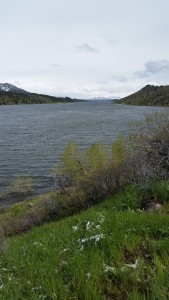
Several unrelated studies in England, Denmark, Canada, and Scotland all showed lower mortality, fewer stress hormones, less mental distress and lower incidence of 15 diseases including depression, anxiety, heart disease, diabetes, asthma, and migraines even when adjusted for confounding variables. That is levels of income, education, employment, and exercise did not effect the data. Just living near green space made aHorsetooth Reservoir in Fort Collins difference. If anything, lower income people seemed to benefit the most.

“In Finland, a country that struggles with high rates of depression, alcoholism, and suicide, government-funded researchers asked thousands of people to rate their moods and stress levels after visiting both natural and urban areas. Based on that study and others, Professor Liisa Tyrväinen and her team at the Natural Resources Institute Finland recommend a minimum nature dose of five hours a month—several short visits a week—to ward off the blues. “A 40- to 50-minute walk seems to be enough for physiological changes and mood changes and probably for attention,” says Kalevi Korpela, a professor of psychology at the University of Tampere. He has helped design a half dozen “power trails” that encourage walking, mindfulness, and reflection. Signs on them say things like, “Squat down and touch a plant.””

“Korean researchers used functional MRI to watch brain activity in people viewing different images. When the volunteers were looking at urban scenes, their brains showed more blood flow in the amygdala, which processes fear and anxiety. In contrast, the natural scenes lit up the anterior cingulate and the insula—areas associated with empathy and altruism. It may also make us nicer to ourselves. Stanford researcher Greg Bratman and his colleagues scanned the brains of 38 volunteers before and after they walked for 90 minutes, either in a large park or on a busy street in downtown Palo Alto. The nature walkers, but not the city walkers, showed decreased activity in the subgenual prefrontal cortex—a part of the brain tied to depressive rumination—and from their own reports, the nature walkers beat themselves up less.”

And the nature you visit doesn’t have to be in a wilderness area and it doesn’t just affect mood. Another study showed a 50-minute walk in an arboretum improved executive attention skills, such as short-term memory, while walking along a city street did not. “Imagine a therapy that had no known side effects, was readily available, and could improve your cognitive functioning at zero cost,” the researchers wrote in their paper. It exists, they continued, and it’s called “interacting with nature.”

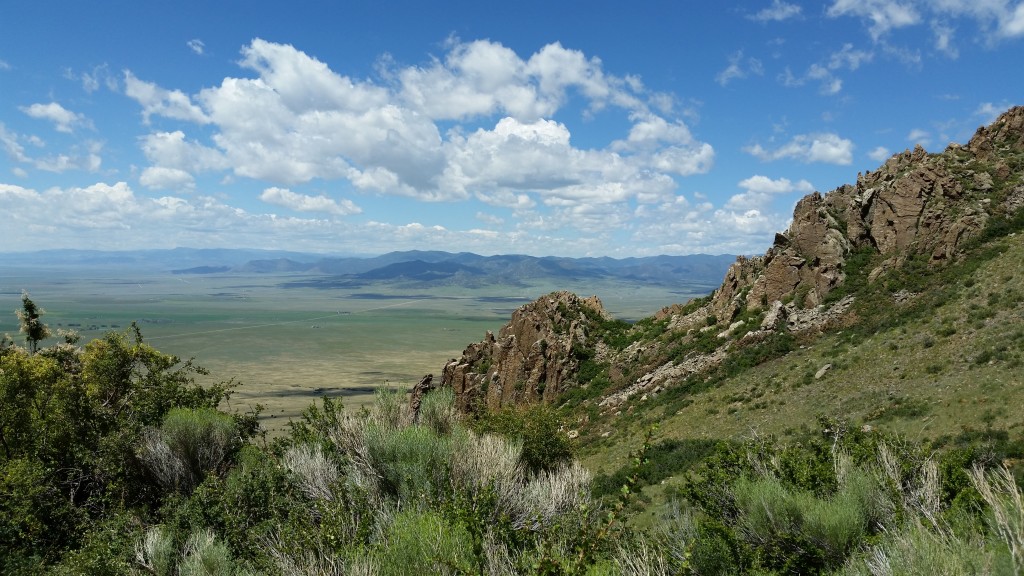
San Luis Valley

To summarize, there is research that suggests viewing and/or being in nature can reduce stress, reduce disease (including depression, anxiety, heart disease, diabetes, asthma, and migraines), decrease blood pressure and heart rate, improve attention, improve mood, increase empathy and altruism, increase creativity, decrease depressive rumination, and while I haven’t seen research that supports this, my experience is that most people tend to enjoy themselves and have a good time. Not bad for something that is free.

So like I said earlier, you really should get outside more. Just getting outside can help. Do it regularly, do it often, and at least once in a while, go for longer periods of time. If you want to make your time outside even more restorative and connecting, here’s a few tips and tools I’ve learned from personal observation that can enhance your experience.

  1. Disconnect from time. If you have a time limit, set a timer or alarm for 1/2 the amount of time you are willing to give to this experience. When this sounds, you will need to turn around and make your way back. Until then, don’t worry about time, your timer will tell you when you need to head back. Let yourself be fully present to the natural environment.
  2. Mark your transition from your urban/suburban/societal/structured/scheduled life into the natural world. When you leave the parking lot, sidewalk, building, etc and enter into natural space, make a mental note that you are shifting from one way of being into another. At this point, be sure your phone is on silent, your to-do list is put away, your calendar holds your obligations, and anything that is taking mental space is put on hold for the duration of your journey.If necessary, physically stop and mentally put down stresses, issues, people, thoughts, feelings, responsibilities, or anything currently bothering you that could get in the way of you being present with the natural world. Imagine a container to hold them and/or put them near a rock, tree, or entrance and leave them there. You can pick them up again on your way out (if you want).
  3. If there is something you are pondering or something is really bothering you and you would be open to letting your creative subconscious mind work on it for you, set an intention or ask a question as you enter this space. Then drop it. Notice what you notice (see below) while you are in the natural environment, and maybe there will be some insight into your situation. Or maybe not, but it doesn’t hurt to try.
  4. Come back to your senses!  Just notice what you notice. When in natural space, let your Mountain Streamanalytical mind take a break and instead focus on your senses. What do you sense outside of you with your sight, hearing, smell, taste, and touch? What do you notice in your body as you move? What do you notice in your emotional and
    energetic state? What thoughts pop into your mind automatically? Just notice what you notice, then notice something else. Over and over again while you are there.
  5. Let your curiosity awaken. What do your eyes get drawn to? What sounds do you hear? What made them?  Don’t worry about right and wrong or really knowing the answer. Just be curious. Which direction will you head? Let your curiosity and intuition be your guide. When you find something interesting, stop and study it with all your senses.  What will you discover?  I’m getting excited for you!
  6. When it is time to leave, before you leave the space pause for a minute or two and reflect on all that you noticed. Offer thanks to yourself for letting yourself have the time and thanks to the space and any creatures, insights, or special moments that presented themselves.
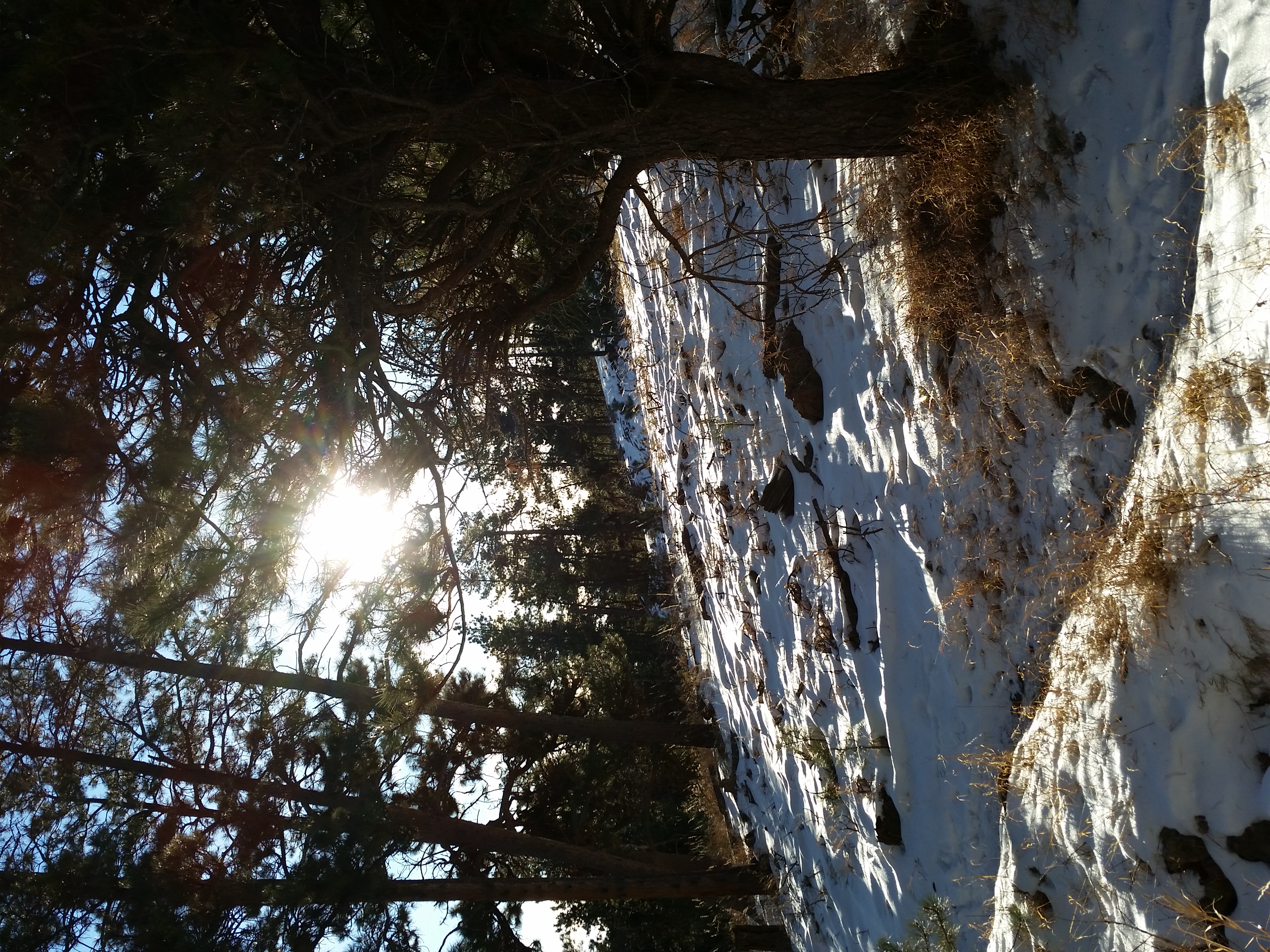
  7. Bring the experience back into your ordinary life. Write about your experience and/or tell somebody that will just listen. Let these questions guide you: What happened here? (Recount as much as you can) What did you learn from it? What are the bigger picture deeper lessons? How can it inform my life? How did this time outside help me?Sun Shining Through the Trees

So there you go. Get outside. Deepen in your relationship with yourself and with the natural world. Do this with a friend or family member and deepen in your relationship with them. If you have questions or would like to share your experience with this exercise, I’d love to hear from you. Email me at [email protected].  Hope to see you outside!


Chuck Hancock, M.Ed, LPC is a Licensed Professional Counselor in the state of CO. He has completed comprehensive training in the Hakomi Method of Experiential Psychotherapy, a mindfulness mind-body centered approach. Chuck guides individuals and groups in self-exploration providing them with insight and tools for change. He also incorporates nature as a therapy tool to help shift perspective and inspire new patterns.



Is your analytic brain still not convinced? Here are links to more articles and research.

Nature and Mental Health, Cognitive Function, Attention: https://depts.washington.edu/hhwb/Thm_Mental.html

Exploring the Mental Health Benefits of Natural Environments
http://journal.frontiersin.org/article/10.3389/fpsyg.2014.01178/full

Stanford researchers find mental health prescription: Nature.
http://news.stanford.edu/news/2015/june/hiking-mental-health-063015.html

2 Minute Walk May Reverse Harms of Sitting
http://well.blogs.nytimes.com/2015/05/13/a-2-minute-walk-may-counter-the-harms-of-sitting/

Benefits Of Ecotherapy: Being In Nature Fights Depression, Improves Mental Health And Well-Being
http://www.medicaldaily.com/benefits-ecotherapy-being-nature-fights-depression-improves-mental-health-and-well-being-261075

Nature experience reduces rumination and subgenual prefrontal cortex activation
http://www.pnas.org/content/112/28/8567.abstract

Creativity in the Wild: Improving Creative Reasoning through Immersion in Natural Settings
http://journals.plos.org/plosone/article?id=10.1371/journal.pone.0051474


Offline Sources

Hartig, T., Mang, M., and Evans, G. (1991). Restorative effects of natural environment experiences. Environment and behavior , 23 (1), 3-26.

Kaplan, R. and Kaplan, S. (1989). The Experience of nature . Cambridge Press.

Kaplan. S. and Talbot, J. (1983). Psychological benefits of a wilderness experience. In Altman, I. and Wohlwill, (Eds.), Behavior and the natural environment . New York: Plenum Press.

Turner, V. (1969). The ritual process . Chicago: Aldine.

Ulrich, R. S. et al. (1991). Stress recovery during exposure to natural and urban environments. Journal of environmental psychology , 11 (3), 201-230.


Do you know of a good study not cited here? Please send it my way.  I’m collecting good empirical support to make time in nature an “Evidence Based Practice.”


Expanding Beyond “Mindfulness”

As I was hiking this morning, I was watching myself, being aware of what I was doing, thinking, feeling, and sensing and a thought occurred, that mindfulness is about so much more than our mind.  As a former software engineer, I was living in a world of thought and cognition, which of course is helpful for many things, but not everything life gives us.  There is so much more to the mind than just thought, and if our definition of mindfulness is Sun shining through the treesonly on thoughts or the absence of thought, there’s so much more we are missing.

Don’t hear me wrong, being more aware of our thoughts, evaluating them as fact/opinion, true/false, helpful/not helpful and working to actively change thought is an essential first step.    It is the foundational basis of Cognitive Behavioral Therapy (CBT) which has been the primary treatment for a couple decades now, but of course there is more.

First let’s be clear that our “mind” is different than our brain (the lump of cells in our skull).  And even our brain is not just thought.  As anyone who has seen the movie Inside Out will know, there are memories, emotions, core beliefs, and more that shape our personality and all are contained in our brain.  (As a side note, if you have not seen this movie yet, go see it!) Our “mind” is much broader and includes all of the components of the brain mentioned above, the remainder of our nervous system, body, and more.  Dr. Dan Siegel, clinical professor of psychiatry at UCLA School of Medicine defines the mind as “an embodied and relational process that regulates energy and information flow.”

His definition is dense and can be broken down into much detail, but for now I just want to elaborate on a couple of points.  The mind regulates information flow – taking in information from our environment, information occurring within us, and information that may or may not leave us through expression.  The mind regulates energy input and output, such as the clamping down and low energy state known as depression.  The mind is embodied, that it is includes our central nervous system and peripheral nervous system that runs throughout our body and feels and expresses through the body.  And the mind is relational – our mind is influenced, shaped, impacted, and includes our relationships of the past and present.

So when we talk about mindfulness, we have to keep in mind that our mind is not just our brain, which is not just our thoughts.  It’s helpful to start with tools that help us learn awareness and focus, but then we also need to keep in mind that when we talk about mindfulness, we also need to consider and work with body-fulness, emotion-fulness, sense-fulness, thought-fulness, memory-fulness, self-fulness, other-fulness, relation-fulness, heart-fulness, personality-fulness, habitual behavioral pattern-fulness, and all the other components of being human.

You can try some exercises and see a diagram of this on my Mindful Practice page.

To explore all these areas, it takes awareness, skill, willingness, patience, and it is quite helpful to have a guide.  After all, how do you explore the relational aspects of mind by yourself?  Further, most of us tend to stay in our habitual comfort zone, and having someone to help point out the things we are not seeing on our own is an important part of the process of growth and healing.  Exploring all of this is what Dan Siegel calls “Mindsight,” and I call it your Inner (and outer) Life Adventure.

Happy exploring!


Chuck Hancock, M.Ed, LPC is a Licensed Professional Counselor in the state of CO. He has completed comprehensive training in the Hakomi Method of Experiential Psychotherapy, a mindfulness mind-body centered approach. Chuck guides individuals and groups in self-exploration providing them with insight and tools for change. He also incorporates nature as a therapy tool to help shift perspective and inspire new patterns.

New Therapy Group for Teens


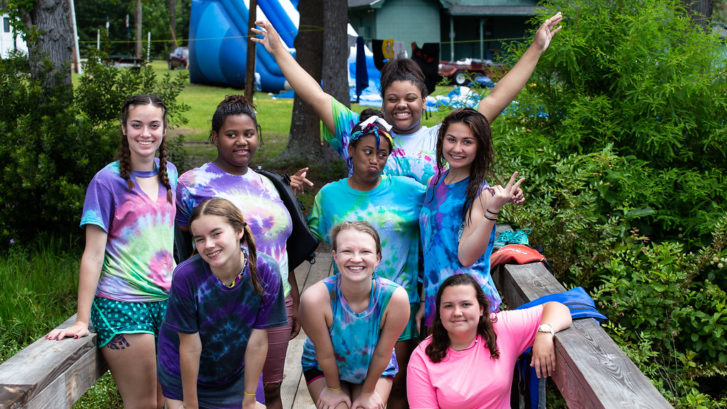
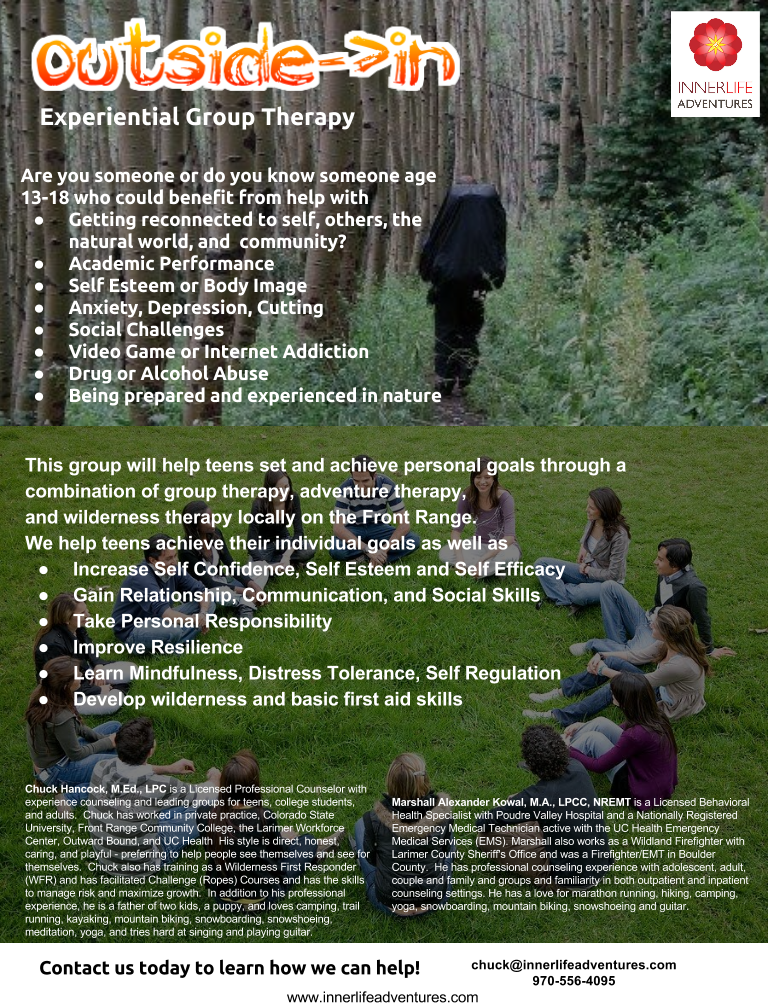
Join us for a new first of its kind hybrid group therapy and wilderness therapy group for teenagers locally on the Front Range based out of Fort Collins, CO.  This outdoor group was created to offer the best of coaching, therapy, and wilderness adventures to adolescents without the cost and time commitment of traditional backcountry programs.

This group is open to all teens of all genders regardless of “issue” who are simply looking for personal growth by getting outside and joining in a community of peers, connecting with themselves, others, and nature. Through exploring themselves, overcoming challenges, developing new skills,  and being guided by expert facilitators our participants learn to bring the best of the lessons and experiences of the outside…. in.

For more details, click here and or contact Chuck directly at [email protected] or 970.556.4095.

Download a pdf version of the flyer to print, email, and share with someone who could benefit.

Outside--in flyer


It’s OK to be Angry

Most of us have a conflicted and misinformed relationship with anger.  On one hand, some people think it anger is bad and do everything

Angry Face

Photo By: Lara Schneider

possible to stay well away from it to never risk feeling that way and when it does slip out, they feel guilty for being angry.  Or for other people it is the go-to emotion.  Anger is the only reaction that is possible and it gets overused with the wrong people at the wrong times.  Obviously, as with most extremes, neither reaction to anger is healthy.

Anger is a natural and helpful emotion that says, “something is happening I am really not okay with” or “something is not happening that I really need.”  Anger is our system’s response that says this is so important, I’m going to do whatever it takes including getting bigger, louder, faster, stronger, and more powerful to make it happen.  Obviously, without this reaction, we can get taken advantage of, resulting in even more hurt.   So it is important to never cut ourselves off from our anger.  But it is also helpful to learn how to be angry in a helpful and productive way to avoid doing damage to those we care about.

Here are a few tips for having productive anger:

1) Slow down.  When we get angry, our nervous system is aroused.  Its the “fight” part of the “fight or flight” response.  But we can and need to consciously control this.  Name for yourself (and others) that you notice yourself getting activated.  Take slow deep breaths.  Take a time out.  Go for a walk or run outside.  Avoid acting from our anger.

2) Identify what is happening that is really not OK or what you really need that is not happening in the situation.  See if there is another emotion under the anger. Write down these needs and/or feelings for yourself or share it with a trusted friend.  Eventually, in a calm state, you will want to share this with the source of your anger.

3) Take responsibility.  Do not blame the other person.  Acknowledge the specific actions that led to your anger and own your reactions and emotions.

4) Make a request for things to be different.  Now knowing what you need, you can now find a way to creatively, rationally, and collaboratively get closer to what you are hoping will happen.

Practicing these things help bring us in closer relationship with ourselves and others.  Always acting from anger or avoiding it ultimately cuts us off and distances us from ourselves and others leading to resentment or hurt feelings.  Of course, it’s not easy, but it’s a worthwhile practice.  Good luck!  Let me know how it goes.

~chuck

What do you think? Better yet, what do you feel? What do you experience? Let’s continue the conversation! You can find me at www.innerlifeadventures.com or email [email protected].  Want to meet?  Here’s how.

Chuck Hancock, M.Ed, LPC is a National Certified Counselor, Licensed Professional Counselor, and a Registered Psychotherapist in the state of CO. He has completed comprehensive training in the Hakomi Method of Experiential Psychotherapy, a mindfulness mind-body centered approach. Chuck guides individuals and groups in self-exploration providing them with insight and tools for change. He also incorporates nature as a therapy tool to help shift perspective and inspire new patterns.

Want more?  Check out The Right Way to Get Angry by the Greater Good Science Center at University of California Berkeley.  With bonus video on how to stay calm during a fight in your relationships.


8 Things I Wish Everyone Knew About Therapy

With so many “healers,” coaches, counselors, psychotherapists, and psychologists out there practicing thousands of methods, there are many misconceptions about what therapy is and isn’t.  I can’t dispel all the myths, but here are a few things I’d like you to know.

alone in the woods1. People who go to therapy are not crazy.  You are not crazy.  
We all have challenges and unique ways of approaching them. Most people feel like they are unique and nobody has ever had the thoughts, feelings, or behaviors that they have. Guess what? We are all human. There is nothing inherently bad, embarrassing, or shameful about anything you are thinking or experiencing. Most of us only feel this way because we don’t take the risk to be vulnerable and share the details of our inner worlds with others. You can be assured, no matter what you are facing, it may be challenging, you may be coping in ineffective ways, but you are not crazy.

2. Relationship is everything.

There are literally thousands of theories and techniques for doing therapy. You know what the one thing is that research shows will be a predictor of a successful outcome? Relationship. The level of trust and safety you feel with your therapist is the best predictor of success. If you don’t feel able to explore the deeper levels of truth first with yourself and also with your therapist, it will be really hard to make lasting changes. Trust and relationship take time to build, really. It can’t be rushed. It is the most important thing we will do. Nobody exists outside of some sort of relationship, and most of us have limited or no access to a truly supportive, deeply caring, and profoundly accepting relationship like can be developed here.

3. I’m not here to give you advice.

You will probably want it at some point, but I am not the expert in you or your life. You are. My job is to help you gain more trust and confidence in your own ability to lead your own life. I will gladly offer talkingreflections of what you are saying, what it seems like you are saying that you are not aware of, and questions to help you get more clear, but your life is yours to live.


4. My job is not to psychoanalyze you.

See above. A good therapist will not claim to have all the answers. I certainly don’t. We are humans just like you. You are the expert in you. My job is to help you peel back the layers to become even more intimate with yourself, so that you know and feel that you are indeed the only one who can be the expert in you. And you are the only one that can make the changes in your life. My job is to be curious as we explore the unknown together, and maybe I can guide a little and empower you to continue with your own self-leadership.

5. All emotions are welcome. Especially anger.

Most of us have a challenged relationship with our emotions. Either we don’t feel or acknowledge them at all or we are totally ruled by them. Neither is helpful. Emotions serve a purpose: they repel us from things that aren’t good for us and bring us closer to things that are. Ignoring the wisdom of your emotions results in poor decision making and disconnection from yourself. And yet if your emotions are controlling you, you probably could use some balance by engaging your thoughts and rational mind more. The point is, therapy provides a safe and welcoming space where all your emotions are welcome, valid, and supported, even the ones that get a bad reputation such as anger. Emotions are an important part of being human.

6. You will probably backslide to old behavior patterns and I won’t judge you.

Most of us have been engaged in habitual thinking and automatic behaviors for a long time. There is a saying in neuroscience that says, “neurons that fire together wire together.” The longer you have a habitual way of thinking or behaving, the more that pattern gets imprinted in our brain. Our old patterns are kind of like the most popular hiking trails near town – they are well-trodden and easy to find. But when you try to make changes to your thinking and behaving, it is like starting a new trail by simply veering off the main trail. It takes many times walking the new path to wear it in, and even then it is still faint. It is much easier, safer, and more comfortable to stay on the familiar trail. It takes much more effort and intention to forge a new trail, but with time, it will also be easy for you to find and then you will have a choice of which path to take. Relapse is part of the change process, it is not failure. This is another reason it helps to have a guide who knows the terrain.

7. You deserve to be happy and only you are in control of that. I want to support you in having the life you want.

This is a complicated topic, but I want you to know that you only have one life and you deserve to enjoy it. Even if the changes you want to make seem huge and there are a lot of factors that seem in your way – relationships, finances, family, job, education, and more, there are ways to be happy in any circumstance, and there are ways to move toward something better for you. It’s worth it.

8. Therapy is weird. And special. And priceless. And takes courage.

Before people come to therapy, they usually try almost everything they can think of to do it on their own. Some approaches are helpful, others are not. People come to therapy for all kinds of different reasons. Therapy can help with many mental, emotional, and relational challenges – and even some physical (somatic) symptoms. But it can be hard to meet with someone who is a total stranger at first and talk about the most vulnerable and personal things that we sometimes don’t even want to share with our closest friends or family. And that is part of what makes it special and priceless. For most of us, we can’t find any other relationship like this where it is safe to talk about anything, and have it met with 100% acceptance, no judgment, and even some gentle support on how to do things differently.

Our automatic habitual thoughts and behaviors are mostly unconscious. Without outside input, it is likely we will stay stuck doing and thinking the same thing. When you are ready for a trained guide to take you out of the familiar and into a new life, we’ll be here. See you then.

~chuck

Edit: Right after publishing this, I came across this post written from a therapy client.  Great insights from an experienced client’s perspective.

What do you think? Better yet, what do you feel? What do you experience? Let’s continue the conversation! You can find me at www.innerlifeadventures.com or email [email protected].  Want to meet?  Here’s how.

Chuck Hancock, M.Ed, LPC is a National Certified Counselor, Licensed Professional Counselor, and a Registered Psychotherapist in the state of CO. He has completed comprehensive training in the Hakomi Method of Experiential Psychotherapy, a mindfulness mind-body centered approach. Chuck guides individuals and groups in self-exploration providing them with insight and tools for change. He also incorporates nature as a therapy tool to help shift perspective and inspire new patterns.

First Day of Kindergarten

Starting (Continuing) School – For kids big and small

I just left my son after spending the first hour of his public education experience with him.  I was surprised to feel the immense emotions and tears that came flooding in as soon as I left him.  When I was there, I was the rock.  I was solid, reassuring, gently guiding and encouraging, acquainting him with the room, teacher, and other kids he’ll be spending over 1,000 hours of his life in.  But not a cold heartless, detached rock.  I could feel him deeply – his simultaneous apprehension and strength in being immersed in his new environment.  Hearing all the advice handed down to me from other parents, I started to dismiss everything I felt as “normal” or just part of it, but as soon as I walked away, it hit me.
The teacher is good, kind, professional.  She invited him and the other students to choose their own dot to sit on for whatever was next.  I gave him one last hug and kiss for the day and he went over to join the other kids, but in his own way, at the far edge of the mat.  Looking a little sad, a little scared, then – a little angry?  It shocked me.  I didn’t see it coming.  But again, I dismissed it as “normal,” just part of the experience.
I’m tempted to just ignore it, pick up my smartphone, post only the sweet happy picture, move on with my

day and ignore these feelings.  I could just call this “normal” and move on.  But as I sit with these feelings, not avoiding but feeling fully and exploring with curiosity, they talk to me.

I realize that today marks the first real day of his experience in the “system” – the overburdened under-resourced system in charge of taking care of and educating our kids.  The system that despite the level of skill, training, and care of the teacher, cannot possibly provide the same level of understanding, knowing, and individual connection that a sensitive child needs to feel safe and thrive.
I saw today how much like me my son is, and there are so many parts of me I wish he didn’t have to inherit.  He is strong and capable of doing what is asked of him, but it comes with a cost.  The cost of ignoring his feelings and his truth.  The cost of ignoring and overriding what we really feel to “fit in.”  The cost of separating a little more from our self.
As I dig deeper I feel into the parts of me that have been so wounded in school.  Feeling shy, awkward, not fitting in, afraid to introduce myself to new people, wanting to play and have fun, but being unable to due to all the things I feel.  I feel into the parts of me that know what I want, and feel it is not available there.  As I feel  in deeper I touch the places in me that were made fun of by other kids, the parts of me that felt like I don’t belong, the part of me that was made to feel bad by teachers when I spoke up for myself, and the parts that felt stupid, awkward, nerdy, out of place.  Maybe it was just projection, but it felt as if I could see and feel all of those things in him.  I felt like I had cursed him to relive all of the hard things I experienced in school.
In the moments before I left, we went out to get his water bottle from his back pack.  He said he wasn’t really thirsty, but hungry.  I told him it wasn’t time to eat now, that he would have to wait a bit.  I felt him sink.  It wasn’t the school or the teacher who committed the first act of violence, it was me.  I was the one who took him there and I was the one asking him to ignore his needs to fit in with the system and obey the schedule.
I could go on and on about countless transgressions throughout my school experience that shaped how I show up in the world, but I don’t want to sound like a drama queen.  You may think I’m blowing it out of proportion. (Heck, there is certainly a part of me that does.) Besides, what’s the big deal, I got over it.  I found ways to make friends, develop coping strategies (some healthy, some not), and be successful.  I made it out ok.  Today I’m fine (mostly).  But these experiences matter.  They shape us – and don’t want to ignore these things so often brushed off and not spoken of.
Before I started really looking into myself with the lens of mindfulness, therapy, and personal growth I dismissed these things I felt and told myself they were no big deal and I was being too sensitive, dramatic, or even worse names I won’t repeat here.  Of course I drank a lot from age 16-30+, and was unhappy, but hey, that’s what everyone else does too, right?   But I’m sharing these words because they are my truth. And I’m sharing now, because I didn’t have the awareness, words, or people who would listen then.
I’m feeling tremendous grief.  For all my past hurts, for all the ways I was rejected by others and the ways I rejected myself.  I’m feeling tremendous sadness for introducing my son to the beginning of this system that has the potential to cause him so much suffering.  But my point is not to dwell in the pain and sorrow, but to give words to and acknowledge it, as part of the experience of living in our world today.  But my question is, “Is it necessary?”
So many parents feel mixed emotions on this day, and this is my attempt to name some of them specifically, at least from my experience.  But my wish is not to dwell on the hurts of the past (mine) and the future (my son’s), but to acknowledge they exist and move on with a wish for something different for our children.  I hope to give voice to those children that may look like nothing is wrong on the outside, but have been deeply impacted. And to forgive myself for my role in bringing my child there and dealing the first blow.  I know that no matter how much I have tried to prepare him to do things in a better way than I did, he still has to have his own life and his own experience.  And I hope that I can trust that when things are hard for him.
My wish is that the children, their needs, and their feelings are honored, even and especially if they are inconvenient to the adults.  I hope and pray that they have the support they need to help them through the hard times, and that with the guidance of attuned parents, teachers, neighbors, friends, and family members they are able to have and remember more moments of joy, play, love, curiosity, innocence,  and excitement about life.   That our differences and awkwardness are treasured rather than made fun of.  That our children are able to live lives that are better than we did, and we are the ones that empower and help create this for them.  That children can learn to value and trust themselves, even when it is in opposition to others, especially those in authority.  But not that they are reckless anarchists, rather they learn civility and respect of all people, especially those that are different than them and in opposition to them.   My wish is that our children are given the love and support they need to not have to struggle, but to feel safe, welcome, and empowered to thrive in this world bringing their unique gifts and talents fully to the world.  That they never have to question it, they can just be it.
I don’t know exactly how, but I know it starts with listening to the children, valuing them, valuing their feelings, treating them as equals rather than lower than us.  By helping them rather than punishing them when they are feeling scared, angry, or in any way overwhelmed.  By creating an environment where children can really be known, not just told what to do.  It is harder, it takes more time and resources than we currently give them, and requires a radical paradigm shift, but don’t you think our children are worth it?
On this day, the first day of school, I hope are able to change ourselves and our systems to really (not just in a cheesy mission statement kind of way), but really truly authentically support, empower, and get out of the way, so our children can lead and create a better world, for all of us.

~chuck

What do you think? Better yet, what do you feel? What do you experience? Let’s continue the conversation! You can find me at www.innerlifeadventures.com or email [email protected].  Want to meet?  Here’s how.

Chuck Hancock, M.Ed, LPC is a National Certified Counselor, Licensed Professional Counselor, and a Registered Psychotherapist in the state of CO. He has completed comprehensive training in the Hakomi Method of Experiential Psychotherapy, a mindfulness mind-body centered approach. Chuck guides individuals and groups in self-exploration providing them with insight and tools for change. He also incorporates nature as a therapy tool to help shift perspective and inspire new patterns.

Finding The Blessing in the Newtown School Shooting Tragedy

My heart is hurting for the children – the children who survived the shooting who were there in the school and all the children and teachers who attend schools everyday who were exposed to this news. My heart is hurting for the parents – the parents who lost their young children, the parents who’s children were in the school when it happened, and the all the parents around the world who send their children to school everyday. All of these lives are forever impacted. Rather than focus on the pain of the tragedy, I hope we can focus on the blessing.  And it for those directly impacted, it will take time.

When someone is hurting in isolation, it is easy for us to look away thinking it is not my problem. Unfortunately, that is what has enabled this event and the increase in shootings in recent years. Many people are hurting so much in isolation without the support of community they feel they have no choice but to hurt themselves or others in an attempt to communicate or end their pain. Now many more people are dead or hurting, and there is nobody who has heard this news that is not affected by it. The blessing of this event is that it is a slap in the face reminding us of our interconnectedness. One person’s suffering is all of our problem. 
If you have come to help me you are wasting your time. But if you have come because your liberation is bound up with mine, then let us work together.
— An Aboriginal Australian woman – Aboriginal activists group, Queensland
I invite you to really feel into yourself the next time you see someone suffering in even the smallest way. You will feel their pain. Modern neuroscience is even showing how and why we feel it with mirror neurons, but we can still choose to detach with alcohol, drugs, TV, busyness, or simply rationalizing about it. It is easy to disconnect, but this shooting makes it next to impossible to not feel it. Don’t disconnect from yourself. Stay present with the suffering you see around you and do something to help. It may be tempting to avoid feeling the grief by taking action too quickly, but avoiding your grief will only prolong it and turn it into fear.
I’m glad to see so many speaking out now on treating “severe” mental illness as a result of this event, but I feel we can’t just put the blame on those people with “severe” symptoms.  These are just the people that feel our societal problems the most. They are the canaries in the coal mine. They are the ones being ostracized in the biggest way, but we all feel separate and isolated with nowhere to turn for help in our own small ways, and we can’t ignore it any longer.

With this reminder of our interconnectedness, perhaps we can now focus on helping each other. Putting more locks on schools or passing laws about gun control will do absolutely nothing if we continue to ignore each other’s suffering. We all have it. Let’s not wait until it gets extreme enough to cause any more serious harm. Don’t ignore your unhappy coworker, neighbor, cashier, classmate, or stranger. Don’t ignore your own unhappiness. Get help. Be help. Get authentically reconnected with the people you see everyday. It’s important.   

~chuck

What do you think? Better yet, what do you feel? What do you experience? Let’s continue the conversation! You can find me at www.innerlifeadventures.com or email chuck @ innerlifeadventures.com.  Want to meet?  Here’s how.

Chuck Hancock, M.Ed., LPC is a National Certified Counselor and Psychotherapist in the state of CO. He has completed comprehensive training in the Hakomi Method of Experiential Psychotherapy, a mindfulness mind-body centered approach. Chuck guides individuals and groups in self-exploration providing them with insight and tools for change. He also incorporates nature as a therapy tool to help shift perspective and inspire new patterns.

1 2